
Written by
El Amine
October 12, 2025
6 min read
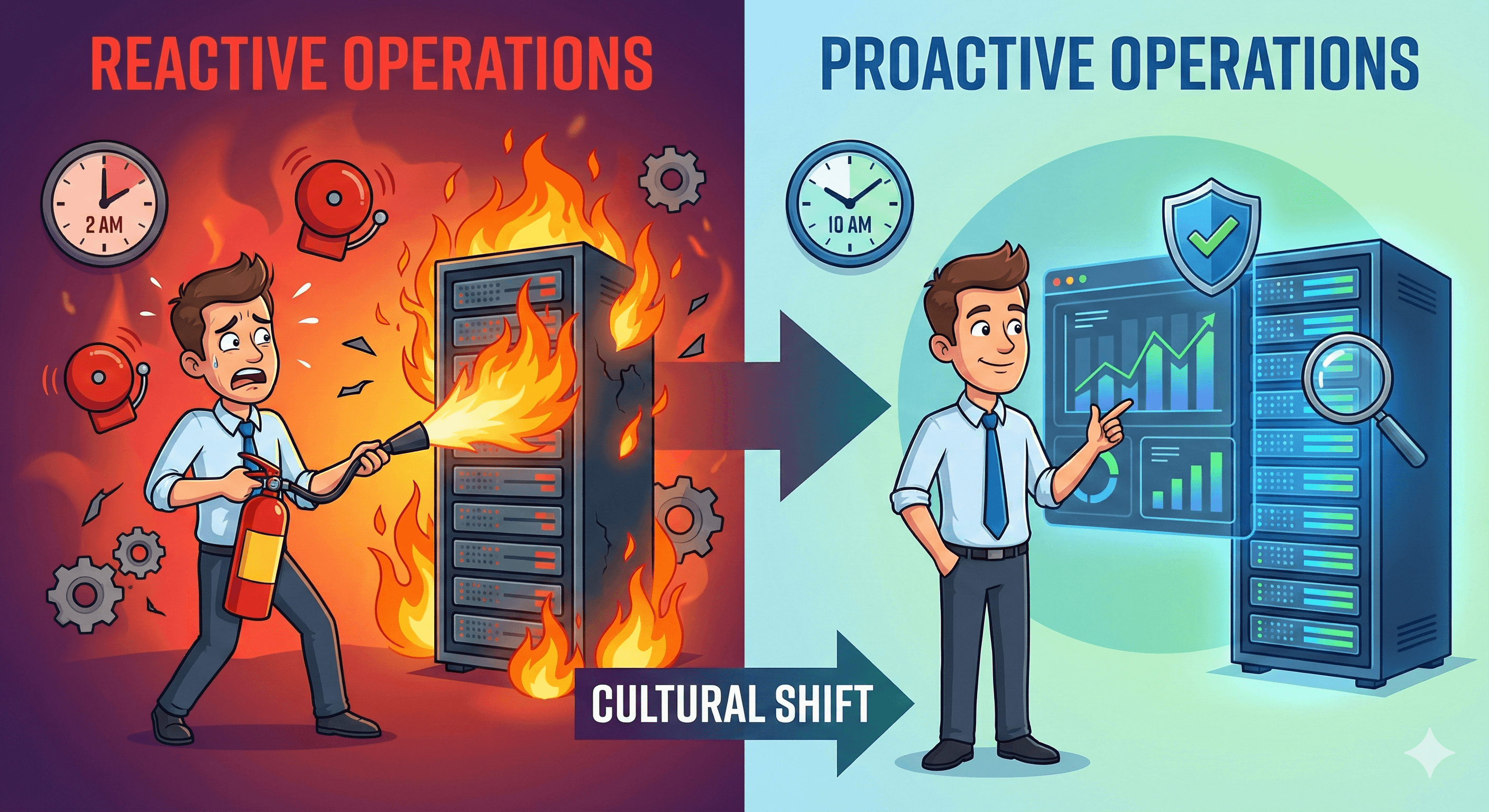
Most database teams operate in perpetual firefighting mode. Someone reports slow performance, DBAs investigate. The database crashes at 2 AM, DBAs scramble to restore service. A query times out, developers blame the database.
This reactive cycle is exhausting, expensive, and completely avoidable. The best database teams prevent 95% of problems before anyone notices them—here's how they do it.
The Reactive Cycle That Never Ends
Reactive database management follows a predictable pattern:
Problem occurs (slow queries, crashes, timeouts)
Users report problem or monitoring alerts
DBAs investigate root cause
DBAs implement fix
Return to step 1 with the next problem
This feels productive because you're constantly solving problems. But you're solving the same types of problems repeatedly because you never address root causes or implement preventive measures.
The Cost of Reactive Operations:
DBAs spend 70-80% of time firefighting instead of strategic work
Problems recur because symptoms are treated, not causes
Team morale suffers from constant crisis mode
Business stakeholders lose trust in database reliability
Technical debt accumulates because there's never time for proper fixes
What Proactive Database Operations Looks Like
Proactive teams flip the script. Instead of waiting for problems, they:
1. Monitor Leading Indicators, Not Just Failures
Reactive teams get alerted when the database crashes. Proactive teams get alerted when trends predict a crash in 2 weeks.
This shift from monitoring failures to monitoring indicators means catching:
Query performance degradation before users notice
Capacity constraints before systems hit limits
Security vulnerabilities before exploitation
Configuration drift before it causes issues
The best monitoring doesn't tell you what broke—it tells you what's about to break with enough time to prevent it.
2. Automate Routine Maintenance
Reactive teams manually run maintenance when performance gets bad. Proactive teams automate maintenance so performance never degrades.
Tasks That Should Never Be Manual:
Index defragmentation and rebuilds
Statistics updates
Backup verification
Log file management
Performance data collection
Health checks and diagnostics
When routine maintenance runs automatically, you eliminate entire categories of preventable problems. The database doesn't slow down from fragmented indexes because indexes never become fragmented.
3. Build Systems, Not Heroics
Reactive culture celebrates the DBA who stays up all night fixing the outage. Proactive culture builds systems that prevent outages from happening.
Hero culture is toxic because it rewards firefighting over prevention. The DBA who prevents 50 incidents through smart monitoring gets less recognition than the one who dramatically saves the day.
Shifting to proactive operations means:
Recognizing prevention as more valuable than reaction
Building repeatable processes instead of relying on individual expertise
Documenting solutions so problems stay solved
Investing time in automation that prevents future manual work
4. Collaborate With Developers Early
Reactive teams review code after deployment when problems appear in production. Proactive teams review queries during development when changes are easy.
The most expensive place to find a performance problem is production. The cheapest place is before code is written.
Proactive Developer Collaboration:
Query review during code reviews, not after deployment
Performance testing in staging with production-scale data
Database design consultation before schema changes
Shared responsibility for database performance
When DBAs and developers work together from the start, you prevent architectural problems that are nearly impossible to fix later.
5. Treat Capacity Planning as Continuous, Not Reactive
Reactive teams order storage when alerts fire that disks are 95% full. Proactive teams forecast capacity needs months in advance.
Continuous capacity planning means:
Monthly review of growth trends
Forecasting resource needs 6-12 months ahead
Budgeting for infrastructure before it becomes urgent
Testing scalability before hitting production limits
You never scramble for emergency hardware purchases because you saw the need coming and planned accordingly.
Making the Cultural Shift
Moving from reactive to proactive operations isn't a technology problem—it's a cultural change. Here's how to drive it:
1. Measure Prevention, Not Just Resolution
Track metrics that reveal proactive work:
Number of incidents prevented through early detection
Percentage of time spent on strategic work vs. firefighting
Reduction in repeat incidents
Capacity forecast accuracy
What gets measured gets valued. When you measure prevention, teams optimize for it.
2. Create Blameless Post-Mortems
Every incident is a learning opportunity. Blameless post-mortems focus on:
What systemic failures allowed this problem?
What processes can we implement to prevent recurrence?
What early warning signs did we miss?
How can we detect this problem earlier next time?
The goal isn't finding who made a mistake—it's building better systems.
3. Invest in Tools That Enable Proactive Work
You can't be proactive with reactive tools. Investment in proper monitoring, automation, and capacity planning tools isn't optional—it's foundational.
The best tools provide:
Predictive analytics that forecast problems
Automated remediation of common issues
Comprehensive visibility into database health
Intelligent alerting that reduces noise
Tool costs are trivial compared to the cost of reactive operations and preventable outages.
4. Allocate Time for Proactive Work
Reactive teams fill 100% of capacity with firefighting and tickets. Proactive teams reserve 30-40% of capacity for strategic work.
This seems impossible when you're drowning in reactive work, but it's essential. Even dedicating one day per week to proactive improvements starts breaking the cycle. As you prevent more problems, more time becomes available for prevention.
5. Celebrate Prevention, Not Just Heroics
Publicly recognize the work that prevents fires:
The monitoring enhancement that caught a problem early
The automation that eliminated an entire category of incidents
The capacity planning that prevented an outage
The code review that stopped a performance problem
When prevention gets celebrated, teams prioritize it.
The Proactive Advantage
Teams that successfully shift to proactive operations report:
80-90% reduction in emergency incidents
60-70% of DBA time freed for strategic work
Dramatically improved team morale and work-life balance
Higher stakeholder confidence in database reliability
Lower total cost of ownership through prevention
The shift isn't easy, but it's transformative. You go from constant crisis management to strategic database operations that actually move the business forward.
Database fires will never completely disappear, but they should be rare exceptions, not daily occurrences. When your team spends more time preventing problems than fighting them, you've built a proactive culture—and that's when database operations become a competitive advantage instead of a cost center.