
Written by
El Amine
February 15, 2026
5 min read
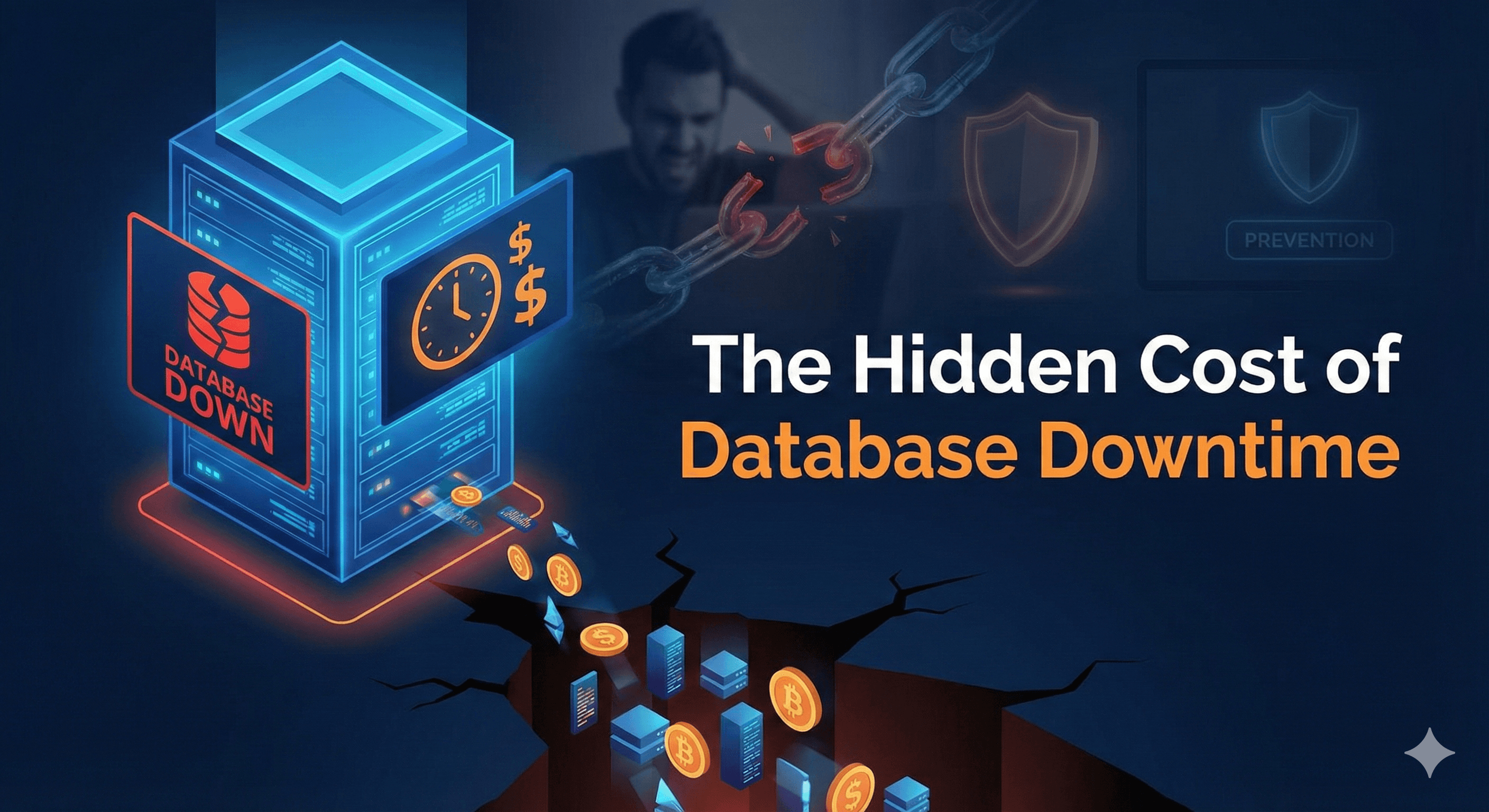
Every minute your database is down, you're not just losing transactions—you're losing customer trust, team productivity, and revenue that may never be recovered. Industry research shows the average cost of database downtime ranges from $5,600 to $9,000 per minute for mid-sized companies, but the hidden costs run much deeper.
Here's what most companies don't account for when calculating downtime impact:
1. The Ripple Effect on Operations
When your database goes down, it doesn't just affect one system. Your customer service team can't access order history. Your sales team loses access to CRM data. Your analytics dashboards go dark. Every downstream system that depends on your database grinds to a halt, creating a cascading failure across your entire operation.
For example, an e-commerce company experiencing a 2-hour database outage during peak shopping hours doesn't just lose those 2 hours of sales. They lose the customer who tried to check out three times, got frustrated, and went to a competitor. That's a lifetime value calculation, not just a single transaction.
2. The Trust Tax
The most expensive cost of database downtime is the one that never shows up on a balance sheet: customer trust. When customers can't access their accounts, complete transactions, or retrieve their data, they start questioning your reliability. In today's competitive landscape, trust is your differentiator—and it's incredibly hard to rebuild once broken.
A single database outage can trigger customer churn that persists for months. Research shows that 25% of customers will abandon a brand after just one bad experience, and 89% will switch to a competitor following multiple poor experiences.
3. The Prevention Paradox
Here's the challenge: preventing database downtime is invisible when done right. Companies often under-invest in monitoring and preventive maintenance because everything seems to be working fine—until it isn't. This creates a dangerous false economy where the cost of prevention seems high compared to a problem that "hasn't happened yet."
The reality is that comprehensive database monitoring pays for itself the first time it prevents a major outage. A robust monitoring system catches performance degradation before it becomes downtime, identifies security vulnerabilities before they're exploited, and alerts you to capacity issues before they crash your systems.
How to Eliminate Unexpected Downtime
The solution isn't hoping for the best—it's implementing systematic protection:
24/7 Automated Monitoring - Continuous surveillance of database health, performance metrics, and security threats. The right monitoring solution doesn't just alert you when something breaks; it predicts failures before they happen by tracking trends and anomalies.
Intelligent Alerting - Not all alerts are created equal. You need a system that distinguishes between minor performance fluctuations and critical threats requiring immediate action. Multi-channel alerting (email, SMS, Slack) ensures the right people know about problems the moment they emerge.
Proactive Optimization - Regular performance tuning, index optimization, and query analysis prevent the slow degradation that leads to sudden failures. This is maintenance that happens before you have a problem, not after.
Expert Support - Having experienced DBAs who can respond immediately when issues arise means problems get resolved in minutes instead of hours. The difference between a 5-minute resolution and a 2-hour outage can be millions of dollars.
Database downtime is not inevitable. With the right monitoring and support infrastructure, you can eliminate unexpected outages and sleep soundly knowing your data is protected. The question isn't whether you can afford comprehensive database protection—it's whether you can afford to go without it.